
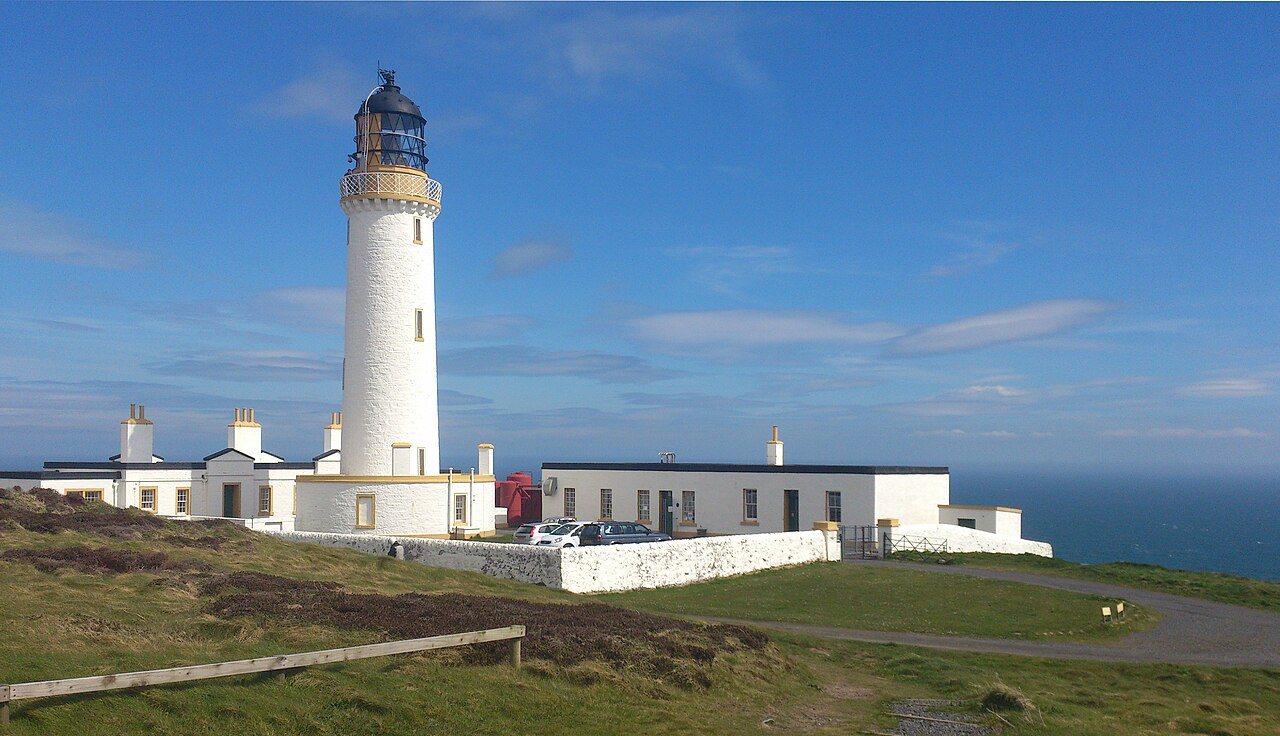
The white tower at the Mull of Galloway is both a coastal landmark and a working navigational aid. A history-focused visit can look beyond the view to the problem the engineers were solving: producing a recognisable light from an exposed headland, maintaining it reliably and adapting its equipment as technology changed.
Begin with the engineering purpose
The Northern Lighthouse Board records the lighthouse's establishment in 1830 and names Robert Stevenson as its engineer. Its position, tower and optical equipment formed a single navigational system. When looking at the building, think about the light's role at sea as well as the experience of seeing the coastline from land.
The tower's physical height and the light's elevation above the sea describe different things. A tower standing on a high headland does not need to be as tall as the total height of the light above water. Keeping the measurements separate helps make sense of lighthouse specifications.
Notice the changes behind a familiar exterior
The NLB account describes earlier optical and mechanical arrangements, conversion to electricity in 1971 and automation in 1988. These stages show how the purpose remained while the means of producing and supervising the light changed. A familiar tower silhouette can therefore conceal a very different working installation.
When viewing historic equipment or photographs, identify which phase they represent. A lens, lamp or mechanism displayed for interpretation may explain earlier practice without being the equipment operating in the lantern today. Use the labels and the NLB history to connect the objects with their dates.
Understand the division of responsibilities
A community buy-out in 2013 covered surrounding land and former lighthouse buildings, while the Northern Lighthouse Board retained ownership and operation of the lighthouse itself. This distinction explains why the navigational installation and visitor facilities may have different points of contact.
Use the NLB for the lighthouse's technical history and the Mull of Galloway Trust for current visitor arrangements. Do not interpret an operating light as a promise that the tower is open for climbing on every day. Likewise, access to surrounding grounds does not establish access to every building.
Choose a visit that suits your group
The NLB gives 114 steps to the top of the tower. If a climb is offered on your date, consider whether the stairs suit everyone before making it the centre of the outing. Confirm current conditions and any visitor requirements with the Trust.
An exterior visit still allows you to study the tower's proportions and relationship to the former keepers' buildings. Keep to permitted areas, allow space for other visitors and treat exposed headland weather as part of your planning. A strong wind can change what feels like a comfortable stop even when the view remains clear.
A couple of practical questions
Is the lighthouse still working?
Yes. The Northern Lighthouse Board continues to own and operate the light. Historical interpretation and visitor activity take place alongside that continuing navigational purpose.
Does automation mean the whole site has no visitors or staff?
Automation concerns operation of the navigational light. Visitor facilities and opening arrangements are separate matters; check the Trust's information for the date and type of visit you are considering.

.jpg)
.jpg)