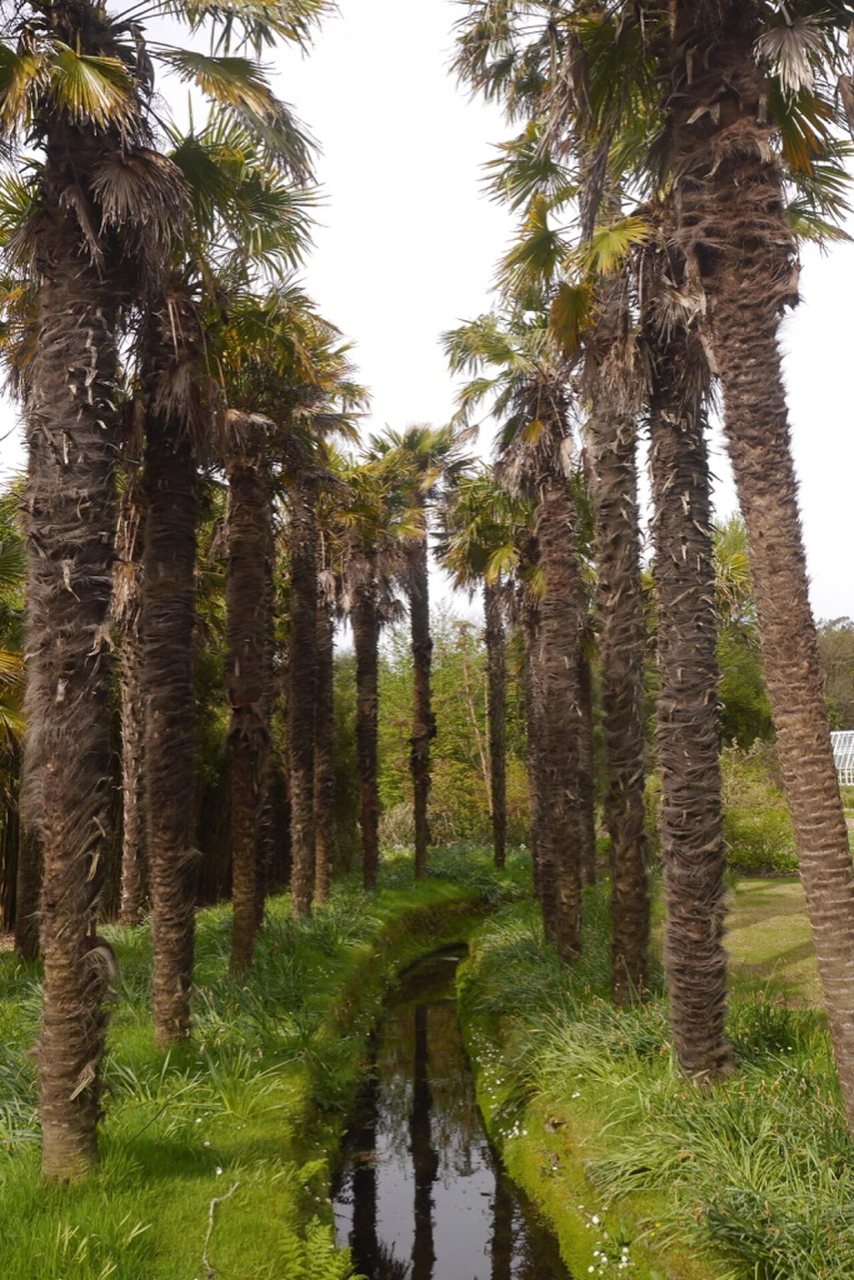
Palms, tree ferns and plants associated with warmer regions can surprise visitors to gardens on the Rhins. Logan Botanic Garden is a particularly useful place to investigate why. The Royal Botanic Garden Edinburgh describes a mild coastal setting that supports an unusual collection, especially from the southern hemisphere. The explanation is not simply that every part of the peninsula has a warm climate. Conditions within a garden and the work of its staff matter too.
Think about the sea's influence
A maritime location can moderate temperatures compared with inland conditions, which helps some plants that dislike severe cold. Logan's official collection information connects its mild setting with plants from Australia, South America, southern Africa and Atlantic islands. These origins are a useful starting point for reading labels, not a claim that all plants from those regions have identical needs.
Look at the range of forms rather than deciding that a tropical appearance proves tropical requirements. Large leaves, textured trunks and evergreen foliage create an impression, but a plant's tolerance depends on the species and its growing conditions.
Look for shelter and placement
Walls, trees and the position of a bed can change how a plant experiences wind and exposure. RBGE research on tender rhododendrons at Logan discusses the contribution of shelter belts and the walled garden alongside the wider climate. On a visit, compare a sheltered planted area with a more open view without leaving visitor paths.
A garden is designed and managed. Drainage, soil preparation, protection and replacement can influence what survives. A successful specimen does not establish that the same plant will thrive unattended in any nearby garden, still less in an entirely different part of Britain.
Read the collection as more than decoration
Botanic-garden labels can connect a plant to its name and geographical origin. Record those details accurately if you want to investigate it later. A photograph of the whole plant and another of the label is more useful than remembering only a common name that several species may share.
Keep expectations flexible through the seasons. Flowers and foliage change, and a particular specimen may not always be available to view. The valuable question is how the garden combines climate, shelter and care, not whether each visit reproduces a promotional photograph exactly.
Take home an observation before a purchase
If a plant inspires you, find out its exact name and requirements before buying a similar one. Consider your own exposure, soil, winter conditions and available space. Staff information or specialist horticultural guidance can help turn interest into a realistic choice.
For a visitor who does not garden, the same observation still works: identify one plant's origin and one feature of its setting. It makes the Rhins' garden landscape understandable without reducing it to a slogan about unexpected sunshine.
A couple of practical questions
Does Logan's planting prove the whole Rhins is subtropical?
No. The garden benefits from a mild maritime setting, shelter and horticultural care. Individual sites and species have different requirements, and the broader label should not replace those details.
Will every highlighted plant be flowering when I visit?
No. Flowering depends on the species, season and conditions. Use current garden information for likely interest and leave room to appreciate foliage, bark and structure as well.