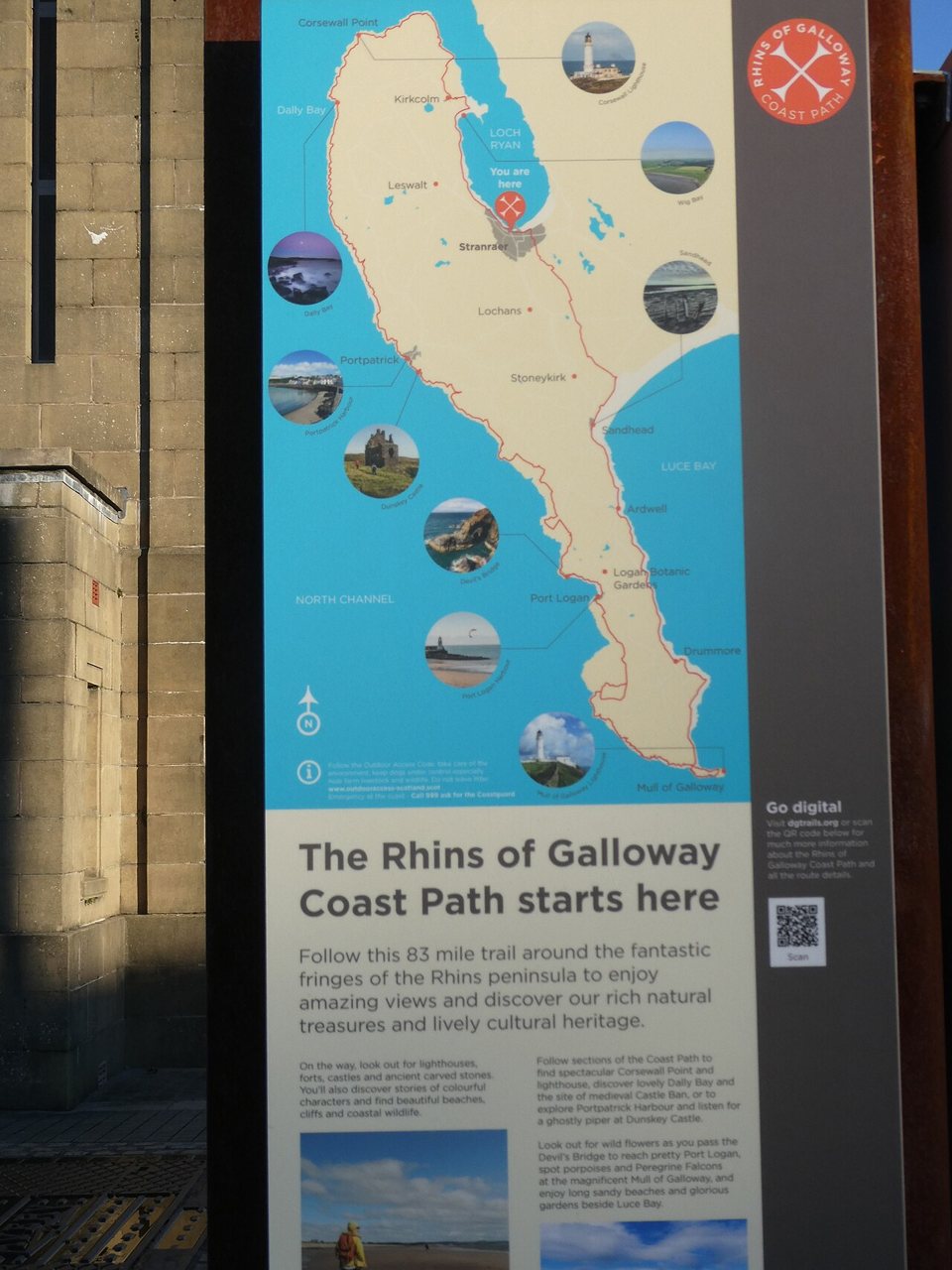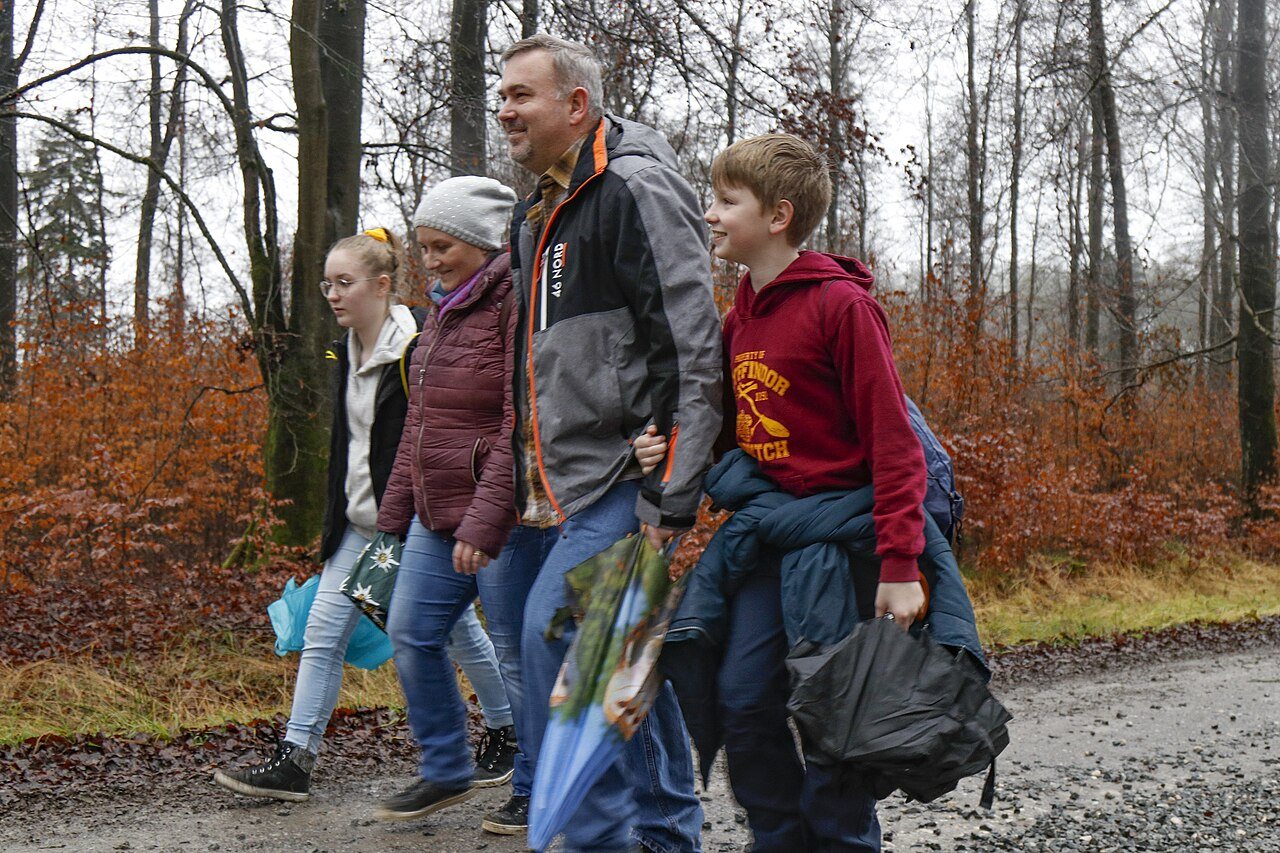
A family walk works best when its success is defined before anyone is tired. Around the Rhins, that might mean reaching a garden feature, watching birds briefly or following a short stretch of a path. It need not mean finishing a published circuit. Build the outing around the children's pace and the adults' ability to supervise the actual terrain, with a turning point everyone understands.
Make the destination understandable
Choose something a child can recognise, such as a specific sign, a safe viewing place or a junction checked on the map. Add a turning time in case the landmark takes longer than expected. Explain that reaching either limit means returning, so changing the plan does not feel like a punishment.
An out-and-back can offer flexible distance, while a circuit needs its whole terrain assessed. Read the official route description for steps, roads and exposed sections. A route recommended for adults is not automatically a useful family walk simply because its distance sounds short.
Put pauses where they help
Plan an early stop before hunger or cold has become the focus. Carry water and food, and choose somewhere clear of traffic, path bottlenecks and edges. Small observation games can happen without collecting anything: find three leaf shapes, listen for two sounds or compare the colours in the view.
Keep children close where conditions require it and give clear instructions before reaching a road, gate or coastal edge. Adults should not be distracted by photography while assuming someone else is supervising. Agree who is watching which child when the group stops.
Leave something for another day
Weather, wet ground and travel fatigue can change how far the group wants to go. Turning while everyone is still comfortable often leaves a better memory than completing a route with an unhappy return. The RNLI's advice about coastal edges, communication and checking weather applies even when a walk is brief.
Afterwards, ask which moment was worth remembering. Use that answer to plan the next outing rather than adding distance automatically. A child who enjoyed looking at one small feature may prefer another short exploring stop to a more ambitious walk.
A couple of practical questions
Should a family walk always be circular?
No. A circuit can be convenient, but an out-and-back may be easier to shorten. Choose by terrain, supervision and return options rather than shape alone.
What if the children want to continue beyond the agreed point?
Reassess the return, conditions and everyone's energy before changing it. A tempting extra view should not remove the margin needed to get back comfortably.