
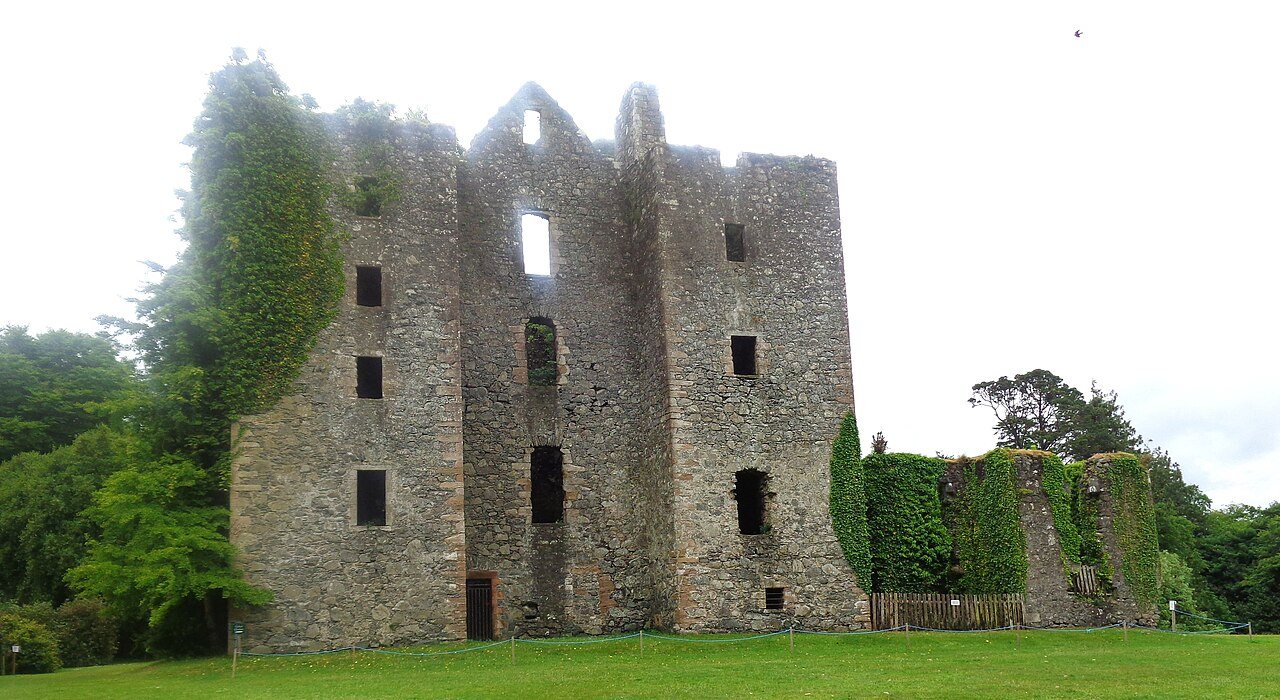
Castle Kennedy can refer to a village, a ruined building or a garden destination. Before setting out, decide which of these you mean. The ruined castle stands within Castle Kennedy Gardens, east of Stranraer, and is part of a much larger designed landscape. A visit makes more sense when the building is treated as one feature in that landscape rather than as a furnished castle awaiting a conventional room-by-room tour.
A fire changed the story
The garden operator's history records a destructive fire in 1716. The standing ruin is therefore a useful place to think about loss and adaptation: the gardens continued to develop around a building that was no longer an intact home. Do not assume that every landscape feature was laid out for the views from a surviving castle window.
The estate's own account describes later restoration and extension of the gardens in the nineteenth century. Those successive changes explain why one view may combine a ruin, formal lines of planting and mature trees. They were not necessarily created together. Ask what belongs to the building's occupied life and what reflects subsequent choices about its surroundings.
Keep Lochinch separate
Lochinch Castle is the later house associated with the estate, not another name for the old Castle Kennedy ruin. Recognising the distinction prevents a common planning mistake: a photograph of a grand inhabited house does not establish that its interior is included in a garden ticket. Use the operator's current visitor description to check the actual scope of admission.
On a garden walk, notice how paths and open views connect individual features. Sketching the outline of the ruin from a permitted path can help you see its mass and position without needing to enter or approach fragile masonry.
Plan a garden visit with a historic focus
Check the current garden admission, seasonal arrangements and accessibility information. Allow time for the walk from the entrance, a look at the ruin and a return at the group's pace. If someone mainly wants architectural history while others prefer planting, agree a small common route before splitting interests.
Stay outside any barrier around the structure. Being able to see an opening does not make it a visitor entrance. A useful final note is one observation about the masonry and one about the landscape; that keeps the castle's history connected to the gardens without confusing their different dates.
A couple of practical questions
Is the old castle a complete indoor attraction?
It is presented as a ruin within the gardens. Check the operator for any current access restrictions and plan around the permitted garden paths rather than expecting furnished rooms.
Can I visit the gardens without studying castle history?
Yes. The ruin gives context, but planting, avenues and the loch setting are separate reasons to visit. Choose a route that suits your interest and available walking time.

.jpg)
.jpg)